

Pakistan stands at a pivotal moment in its history. With a vast youthful population, the country holds incredible potential for social and economic progress. However, potential alone cannot build bridges, fuel industries, or lift communities out of poverty. For millions of children living in remote villages across Punjab, Sindh, Khyber Pakhtunkhwa, and Balochistan, access to a classroom remains a daily hurdle. Even for those enrolled, the quality of instruction often falls short of preparing them for the modern world. Understanding Why Quality Education Is Essential for Pakistan’s Future is no longer just an academic discussion; it is an urgent national necessity.
Real learning goes far beyond basic literacy. It equips young minds with critical thinking, problem-solving skills, and the moral foundation required to lead their communities. At the Ghazali Education Foundation (GEF), we witness every day how a quality education transforms a child’s outlook, giving them the confidence to dream beyond their immediate circumstances.
The Current Educational Landscape In Pakistan
Pakistan faces one of the most complex educational crises in the world. While national initiatives continuously work to increase school enrollment, millions of children still remain out of school. In rural areas, the challenges multiply due to geographic isolation, poverty, and a lack of basic infrastructure.
The Difference Between Schooling And Learning
Enrolling a child in school is only the first step. True progress happens when that school delivers meaningful, effective instruction. Recent national learning assessments show that many students in early grades struggle with basic reading and arithmetic. When children sit in overcrowded classrooms without trained teachers or proper learning materials, they miss out on foundational skills. Quality education ensures that time spent in a classroom translates directly into real knowledge, character development, and practical capability.
The Rural-Urban Divide
The educational gap between major cities and remote villages remains wide. Urban centers often benefit from private academies, digital resources, and well-funded institutions. In contrast, rural villages frequently lack properly equipped facilities and qualified educators. Closing this divide requires targeted intervention at the doorstep of these underserved populations.
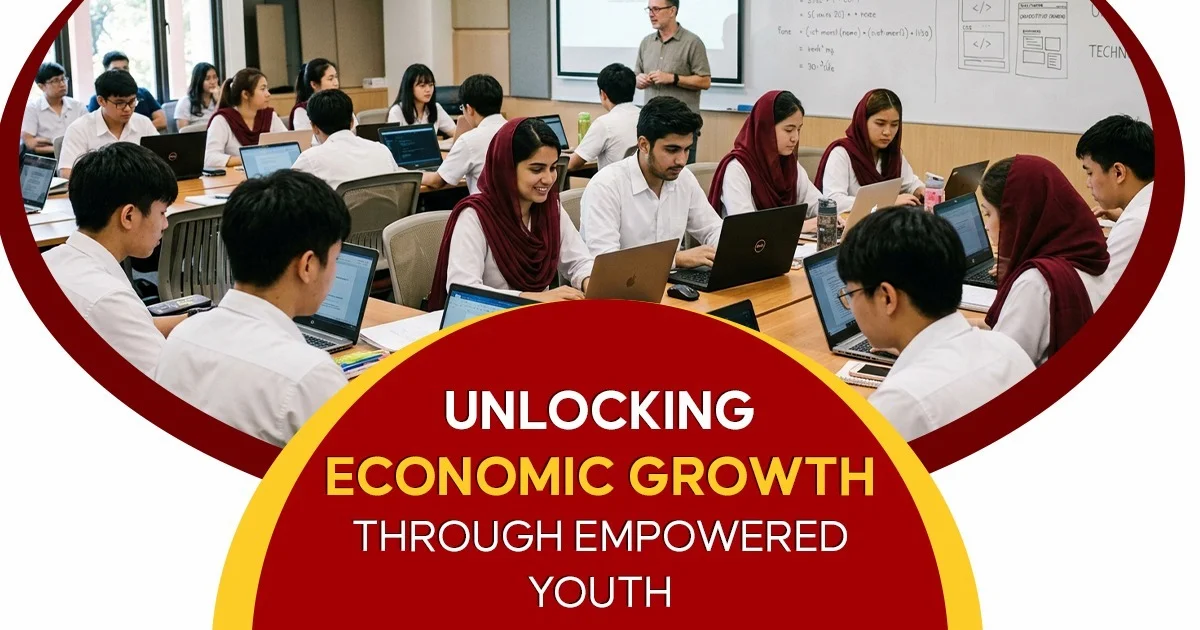
Unlocking Economic Growth Through Empowered Youth
Over 60 percent of Pakistan’s population is under the age of 30. This demographic reality can either become the country’s greatest strength or its biggest vulnerability.
Transforming Demographics Into Growth
An uneducated youth workforce struggles to secure stable, well-paying employment in a rapidly evolving global market. When young people receive a quality education, they acquire the skills needed for modern trades, technology, and entrepreneurship. They transition from dependent family members to active economic contributors who drive national productivity.
Fostering Innovation And Skilled Labor
Modern industries demand workers who can adapt, analyze data, and solve complex problems. By embedding digital literacy and practical problem-solving into rural school curricula, we prepare students to compete in the national and international job markets. Quality learning turns a young workforce into an engine of innovation.
Breaking The Cycle Of Generational Poverty
Poverty is rarely a single event; it is a cycle passed down from parent to child. Without intervention, a child born into poverty is likely to remain in poverty as an adult.
Doorstep Schooling As A Gateway
Establishing quality schools directly within rural villages removes the financial and logistical barriers that keep children at home. When parents see a safe, well-managed school in their own neighborhood, they are far more likely to send their sons and daughters to class. This model is especially vital for girls, as travel safety concerns often halt their schooling prematurely.
Reducing Child Labor And Early Marriages
When families struggle financially, children are often sent to work or married off early to reduce household expenses. Providing free, high-quality schooling, complete with textbooks, uniforms, and learning materials, gives families a viable alternative. It keeps children inside safe learning environments, protecting their health and preserving their childhood.
Building Stronger Communities And Social Harmony
Education is the bedrock of a stable, harmonious society. It teaches young people empathy, civic responsibility, and the value of peaceful collaboration.
Character Building And Ethical Leadership
A well-rounded education does not focus solely on textbooks. It instills ethical values, integrity, and respect for diversity. When children learn the importance of community service and honesty, they grow into responsible adults who uplift those around them.
Empowering Marginalized Groups And Orphans
Orphans and children with special needs are among the most vulnerable members of society. Without targeted support, they risk being left behind completely. Providing these children with scholarships, specialized learning tools, and emotional mentorship restores their dignity and gives them an equal footing in life.
How Non-Profits Are Bridging The Quality Gap
Addressing Pakistan’s education challenge requires dedicated collaboration between local leaders, educators, and social organizations.
| Focus Area | Traditional Challenges | The GEF Quality Approach |
| Teacher Capability | Untrained teachers, rote learning | Regular professional development & active learning techniques |
| Infrastructure | Long commute, unsafe buildings | Safe “doorstep” village schools built within walking distance |
| Student Support | Hidden costs (books, uniforms) | Complete free support covering fees, kits, & health checkups |
| Community Trust | Low parental engagement | Active Village Education Committees involving local elders |
Recognizing Why Quality Education Is Essential for Pakistan’s Future drives every initiative at the Ghazali Education Foundation. Operating across 36+ districts, GEF focuses on training local teachers, modernizing classroom kits, and ensuring that children in remote areas receive the same caliber of instruction as their urban peers.
How You Can Be Part Of The Solution
Creating lasting change across Pakistan’s rural landscape is a collective responsibility. Government efforts, non-profit execution, and donor generosity must work together to reach every child.
- Fulfill Your Zakat and Sadaqah: Directing your religious obligations toward educational sponsorships provides orphans and needy students with tuition, uniforms, and nutrition.
- Adopt a Rural School: Sponsoring a classroom or an entire village school ensures that multiple generations of children gain access to quality education.
- Spread the Word: Advocating for educational equity within your personal networks raises awareness and mobilizes essential resources.
Every child deserves the chance to read, write, and explore their potential in a safe, inspiring environment. By supporting quality education today, you are not just funding a classroom; you are securing the future of an entire nation.
Join our Circle of Compassion today and help us bring quality education to the children who need it most.
Invest In A Child’s Future Today
Your support can break the cycle of poverty for an orphaned or underprivileged child in rural Pakistan. Give them the gift of a quality education, complete with books, uniforms, and dedicated mentorship.
Sponsor A Student’s Education Now