

Every single child enters this world full of raw potential, curiosity, and big dreams. But turning that curiosity into a stable, independent life relies entirely on one basic thing: being able to read and write.
When we talk about the importance of education for children, we aren’t just talking about passing exams or memorizing facts. We are talking about human dignity, safety, and giving a kid the power to choose their own future.
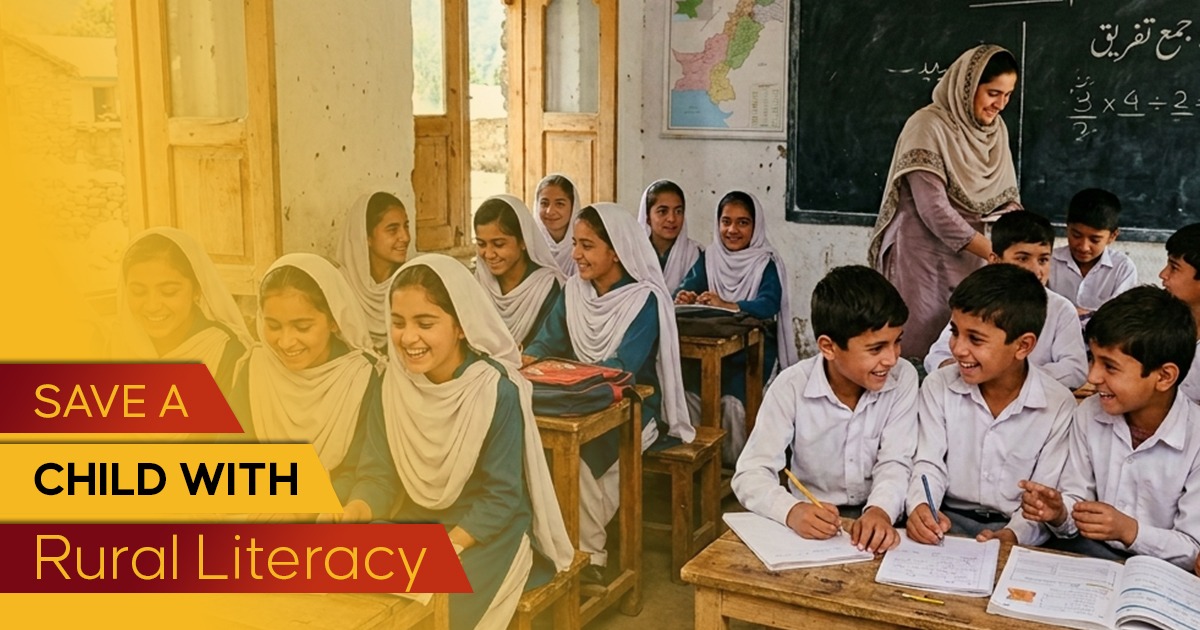
Unfortunately, for millions of young boys and girls in rural Pakistan, this basic right feels like an impossible dream. When a family is forced to focus entirely on daily survival, textbooks become a luxury they simply cannot afford. To break this cycle of illiteracy, we have to look at what actually happens when we clear a path to the classroom.
What a Simple Classroom Actually Changes
Learning to read and write completely reshapes a child’s world. It is the ultimate gateway skill. If you can read, you can understand a doctor’s prescription, learn a trade, and protect yourself from being cheated.
Building Real Confidence
When a young student finally reads their first full sentence, a massive internal shift happens. They stop viewing the world as an intimidating place run by others and start seeing themselves as active participants. This personal confidence is exactly what builds resilient adults who can stand up for their families later in life.
Developing Critical Thinking
A good classroom teaches a child how to think, not just what to think. By playing with math, science, and books, kids learn to analyze situations and solve problems. These are the exact mental tools needed to navigate modern life and find stable work in a changing job market.
How Classrooms Keep Vulnerable Kids Safe
Going to school does a lot more than fill a child’s mind—it physically protects them from real-world dangers that thrive in poor communities.
- A Shield Against Forced Labor: In underserved villages, kids who aren’t in school are at a massive risk of being pushed into hazardous child labor. Instead of holding pencils, they end up working grueling hours in fields or brick kilns just to help buy food. A safe local school acts as a physical shield, keeping them protected and focused on growing up.
- Delaying Early Marriages: For young girls in remote regions, staying in school is a life-altering intervention. The data shows that keeping girls enrolled drastically reduces early marriage rates. When communities finally realize the true importance of education for children, they start valuing a girl as a future teacher, professional, or leader, completely changing local traditions.
The Real Obstacles to Rural Literacy
If school is so life-changing, why are so many kids still left behind? The answer comes down to the harsh, practical realities of daily life in rural Punjab, Sindh, and Balochistan.
The Problem with Long Distances
In remote areas, public schools are often miles away across rough, unsafe terrain. Parents are naturally terrified to send their young children, especially girls, on long, dangerous walks every morning. The Ghazali Education Foundation solves this exact issue through our “doorstep education” model, building quality schools directly inside the heart of these distant villages.
Hidden Costs that Break Budgets
Even when a school claims to be free, the hidden costs can completely break a family’s monthly budget. Buying uniforms, proper shoes, notebooks, and backpacks is almost impossible for a parent earning a meager daily wage. Providing these basic materials free of charge ensures that financial hardship never stands between a bright mind and a school desk.
Your Chance to Make a Difference
Changing the landscape of rural Pakistan isn’t something one person can do alone, but it does rely on individual, manageable actions.
By directing your general donations, Zakat, or Sadaqah toward rural education, you aren’t just funding a temporary project, you are building a permanent infrastructure of hope. You are buying the books, training the local teachers, and keeping the facilities clean and safe. It is an investment that easily outlives a single lifetime, creating a ripple effect of prosperity for generations.
Step Into the Circle of Compassion
Every single day a child spends outside a classroom is a lost opportunity to find out what they are truly capable of achieving. We have the proven models, the dedicated local teams on the ground, and the community trust required to end this literacy crisis. The only piece missing is the funding to reach the very next village.
Join our Circle of Compassion today, take direct action, and give a deserving child a real chance at life.