

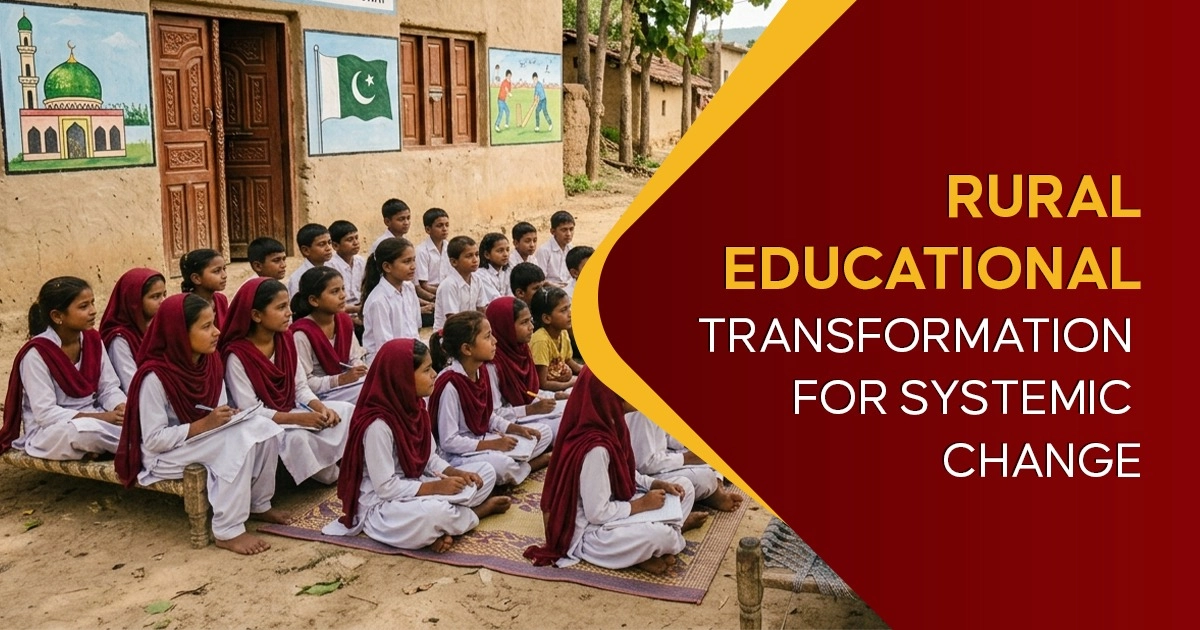
Education stands as the undisputed cornerstone of sustainable development. When a child learns to read, write, and think critically, an entire community moves a step closer to standing on its own two feet. Yet, for millions of children living in Pakistan’s furthest corners, this basic human right remains an unfulfilled dream. Geographical isolation, crushing financial limits, and decaying public infrastructure keep the classroom door firmly shut for too many families.
This is exactly where grassroots non-profits step in to alter the course of history. Looking at how NGOs improve education in rural Pakistan, it becomes obvious that true transformation requires deep, structural changes rather than superficial fixes.
Organizations like the Ghazali Education Foundation (GEF) have pioneered unique models that turn isolated villages into vibrant centers of learning. By designing holistic solutions specifically tailored for underprivileged communities, these groups are systematically rebuilding the educational landscape from the ground up.
“Education is not a privilege meant for a few; it is the fundamental foundation upon which the future of our entire nation rests.”
The Complex Realities of the Rural Literacy Crisis
To truly appreciate the operational triumph of rural school networks, we first have to understand the steep hurdles they overcome daily. In many remote communities, sending a child to school isn’t a simple, straightforward choice.
Crushing Economic Obstacles
When a household is struggling just to put two meals on the table, the extra costs of schooling become an impossible burden. Even when tuition is nominally free, expenses like notebooks, uniform sets, shoes, and transport fares quickly exhaust a family’s meager daily earnings. Faced with these harsh realities, parents are forced to choose immediate survival over long-term learning.
Distant and Unsafe Access
In regions like Balochistan or rural Sindh, formal schools are often located miles away from tiny residential settlements. Walking for hours under a scorching sun over difficult, unpaved terrain is tough for any child. For young girls, these long distances present serious safety risks. This structural gap explains why female dropout rates traditionally spike right after primary school in rural districts.
The Three Pillars of Rural Educational Transformation
The success of these programs does not happen by accident. It comes down to targeted, data-driven initiatives designed to address both cultural sensitivities and financial realities.
1. Bringing the Classroom to the Doorstep
The absolute foundation of modern rural education is proximity. By building community-based schools directly within villages, non-profits completely remove the safety and transportation anxieties that keep children home. This single shift has radically transformed female enrollment numbers, giving parents true peace of mind.
2. Investing in Local Teachers
Building a school facility is only half the battle; the real magic happens through the educators inside. Non-profits actively recruit and train local youth, particularly young women—to become certified teachers. When educators belong to the same village as their students, high teacher attendance is virtually guaranteed, and the lessons remain deeply relatable to the community.
3. Comprehensive Financial Aid
True educational access means removing every hidden cost. Through targeted orphan and needy support programs, foundations provide comprehensive kits containing uniforms, books, bags, and shoes directly to the most vulnerable families. This complete coverage ensures that financial distress never forces a child out of the classroom.
The Scope of Impact Across the Provinces
The sheer scale of this educational intervention becomes clear when looking at the network numbers nationwide:
| Milestone Metric | Current Footprint Summary |
| Total Academic Network | Over 850+ Schools established in remote zones |
| Active Student Enrollment | 125,000+ Students receiving active instruction |
| Professional Faculty | 5,000+ Local teachers employed and trained |
| Geographical Reach | Across 45+ Disadvantaged districts |
| Deserving Concessions | 41% of students supported via targeted aid |
Understanding exactly how NGOs improve education in rural Pakistan requires looking past these big statistics to see the actual systemic upgrades on the ground. These include digitized monitoring tools to track student growth, public-private partnerships, and specialized rural inclusive education models that bring children with special needs out of isolation and into standard classrooms.
Dynamic Solutions for Older Youth
The educational crisis also deeply impacts older children who either dropped out early to work or never had the chance to start school at all. To fix this, forward-thinking organizations deploy targeted Accelerated Learning Programs (ALP). These specialized courses pack a primary school curriculum into a shorter, intensive timeframe, allowing older, out-of-school children to catch up with their peers quickly.
Furthermore, the transition from high school to practical employment can be exceptionally tough in rural economies. By connecting formal education with practical vocational training centers, non-profits ensure that graduating youth possess the actual, marketable skills required to secure immediate jobs. This complete pathway transforms students from passive learners into active breadwinners for their households.
How Your Personal Generosity Drives Systemic Change
This massive operational machine relies directly on the consistent support of individual philanthropists and corporate partners. The impact of your giving goes far beyond simple charity, it acts as a direct investment in human potential.
- Fulfilling Social Commitments: Channeling your standard Zakat and Sadaqah contributions directly into school infrastructure turns an annual obligation into an ongoing legacy of learning.
- True School Adoption: Corporate groups and independent donors can choose to sponsor entire school facilities, ensuring a whole village enjoys uninterrupted access to quality learning.
- Direct Orphan Sponsorship: Covering the monthly or annual academic costs for a vulnerable child gives them the stability needed to focus entirely on their dreams.
When you back an education-first non-profit, your contribution directly funds essential textbooks, compensates trained local faculty, and helps maintain clean, safe school environments. This transparent loop ensures that every single rupee spent directly elevates a child’s classroom experience.
Weaving Lasting Hope Across Generations
When you educate a rural child, you aren’t just teaching an individual; you are shifting the trajectory of an entire generation. An educated child grows up to become an empowered citizen who will naturally prioritize the schooling of their own future children. This breaking of the poverty cycle is the ultimate goal of community development.
The long-term solutions are clear, the field methodologies are tested, and the school networks continue to expand into the furthest corners of the country. The remaining challenge is securing the steady resources needed to bring the light of literacy to the final mile. By joining our dedicated Circle of Compassion, you take a direct stand for human dignity and help write a vibrant new chapter for a child who deserves the chance to shine.
Ignite a Future Today
Your contributions have the power to rescue a vulnerable child from the cycle of illiteracy and child labor. Take a definitive step today by routing your charity, Zakat, or school sponsorships to the front lines of rural development. Join us in making quality learning accessible to every child across Pakistan.
Donate to Support a Rural Student Now